In analytic work one often encounters subjects who speak with ease. They reflect, explain, analyse, and articulate their condition with clarity. They can recount their history, describe their relations to others, and situate their difficulties within family, society, or their cultural context. At first sight, this capacity for speech may appear aligned with the aims of analysis. Yet experience shows that among these subjects a distinction emerges between reflection and self-implication. We might say that, in psychoanalysis, what matters is not only that the subject reflects, but the psition the subject takes within reflection.
This distinction can be described in simpler terms as the difference between world-blame and subjective implication. The difference here is not a matter of intelligence or sincerity. It concerns whether the subject positions themselves as an object of what happens, or whether something of their own responsibility, that is to say, their own desire, is brought into question as an active part of their condition.
Dora’s case is exemplary in this respect. She is able to astutely analyse the secretive relations woven between her family and the K. family in great detail. As a young teenage girl, she is aware of the dynamics of courtship and is not duped by pretty words. Yet Freud notices very early on that Dora remains unimplicated in the love business she recounts. In fact, his most valuable interventions attempt to address the possibility of Dora’s involvement in these dynamics. He wonders, for instance, why she is so ready to take care of the K.s’ children when Frau K. and Dora’s father need some time alone during a trip. He is puzzled by her reluctance to enter her house precisely at times when she knows that Frau K. is visiting her father. If, as Freud initially (and wrongly) postulated, Dora were jealous of the affection Frau K. is getting from her father, she would be disposed to at least try to regain her original status as her father’s object of desire. This led Freud to consider that Dora’s desire is also implicated in this constellation in a way of which she is not conscious. Therefore, Dora’s case is exemplary precisely because it demonstrates the difference between world-blame, meticulous as it may be, and one’s implication in the suffering described.
This type of deflection did not die out with the turn of the century. In fact, today, analysands many times come “armed to the teeth” with ready-made jargon that articulates their suffering as originating in the world, in others, in the law, in language, or social structure. They provide psychological explanations for the norms or family structures that have failed them and quote their favourite philosophers or psychoanalysts to that end. They can revise narratives, adopt new frameworks, and refine explanations with precision, all while remaining fundamentally unimplicated in their symptom. None of this is strictly out of the question. But in such speech, more often than not, the underlying logic remains the same: if the world were different, if others behaved differently, if power were not exercised unjustly, then things would be fine for me.
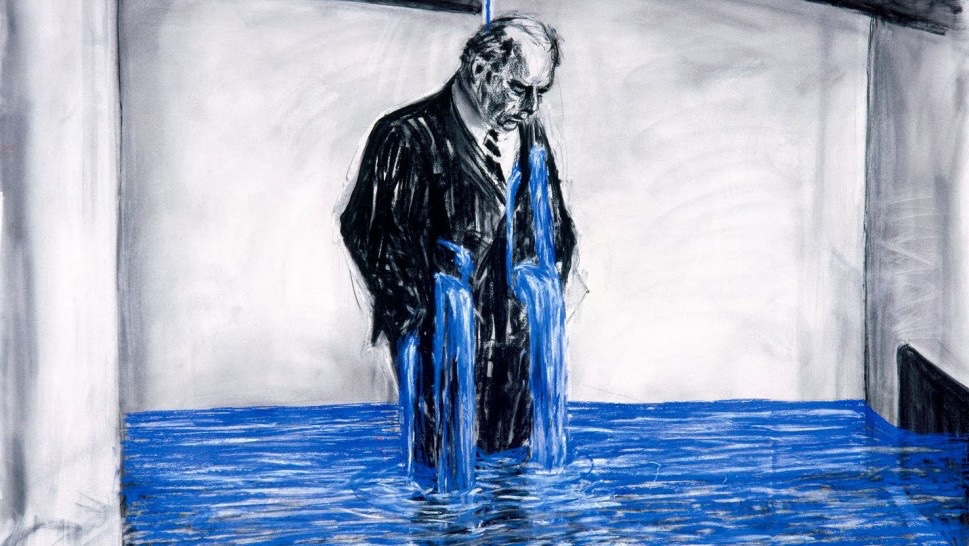
There may be something to be said for shuffling the world’s deck. That said, from the analytic perspective, the issue is not whether the world is flawed or not. Psychoanalysis does not deny the malaise in civilisation. The issue is whether the subject encounters their own place in the economy of their symptom, whether they experience themselves as part of what is happening, or solely as its victim.
This distinction is particularly important because it challenges a common assumption in psychotherapy: that self-questioning is inherently therapeutic. My point is that self-questioning can function defensively. It can create the appearance of openness while protecting the subject from encountering something more unsettling: their participation in what they suffer from. They may say, “I don’t know why this keeps happening,” or “I must be doing something wrong.” Yet this wondering often stops short of true implication. The question remains abstract. It does not touch the subject’s own desire, expectations, or unconscious positioning. The world remains the primary agent. And, an analysis that proceeds without the analyst’s attempts at interpertation of this particular logic runs the risk of becoming a space of endless repetition, which functions as a defence against change.
Even further, when not handled carefully within the transference, this defensive logic can also lead to a withdrawal from or refusal of the world. In fact, in many such cases, the subject speaks of what they reject, oppose, or cannot tolerate, but less and less about what they want. The world is experienced as demanding or invasive. Relationships become arenas in which the subject must constantly defend their autonomy. Withdrawal, isolation, or rigid boundaries may then appear as reasonable and even necessary responses. Relations fail, separation follows, and the failure is attributed to the world. The symptom returns, confirmed rather than displaced.
How does the analyst interpret these defences? Well, in the Lacanian orientation, the analyst does not address defences on the level of reality. This means that the analyst does not correct the analysand’s explanations with their own, nor oppose them with supposedly objective accounts. For instance, when an analysand complains of difficulties falling asleep and argues that this is due to their neighbours’ loud conversations late at night, the analyst does not interject by measuring exact decibel levels or by pointing the analysand to scientific publications claiming that the threshold for sleep is higher. The analyst does not interpret from the position of someone who stands on the side of reality, or of what reality should be for the subject. The analyst is better to listen, to pray on an oportuinity to wonder on the possiblity for subjective implication within the analysand’s speech. It can begin with something modest and fragile: a slight shift from “this why it happens to me” to “how do I always end up here?” The aim is to gently introduce uncertainty where there was previously moral or explanatory certainty. It opens a gap in which responsibility is no longer externalized, but presents itself in an ambiguous but possibly interpretable guise.
Here, I am also not speaking of an analyst attempting to convince the subject of their responsibility in a moral sense. Freud’s interventions in Dora’s case are crude and riddeled with his own countertransference (and possible infatuation with Herr. K.). It is not that Dora is to blame for what is happening around her and inevitably captures her desire in a web of lustful exchanges. The subject is not to be made the object of blame for their suffering, but they must bear some responsibility for it. Responsibility in analysis, therefore, does not concern guilt or obligation. It concerns the subject’s relation to their own desire.
From this perspective, analysis is not oriented toward resolution but of maintaining a delicate balance. Pushing too hard toward implication can feel accusatory or invasive, especially in subjects who already experience others as controlling. On the other hand, colluding with world-blame—affirming the patient’s ideological orientation—can reinforce isolation and rigidity. The challenge for the analyst is to loosen the certainty that nothing about the suffering at stake is their responsibility. This loosening can be unsettling, but it also creates movement.
Importantly, subjective implication does not necessarily lead to quick solutions or better behavior. It does not guarantee improved relationships or reduced suffering. What it changes is the position from which suffering is experienced. Instead of being locked into a battle against the world, the subject may begin to encounter their own involvement in a way that allows for negotiation rather than defense. Therefore, we might say that subjective implication begins to emerge when the question of desire is allowed to surface, not as a demand to know what one wants, but as an acknowledgment that one is oriented toward something, even if that orientation is unclear or contradictory.
In the end, the difference between subjective implication and world-blame is not a matter of truth or error. World-blame can be coherent, justified, and even politically accurate, yet leave the subject isolated and stuck. Subjective implication is often uncomfortable and uncertain, but it introduces the possibility of change that does not depend on the world becoming different first. This possibility does not promise happiness. But it allows the subject to inject life into their necessary inmeshment in the suffering of the world. And this, in the Freudian and Lacanian orientation, is already a decisive shift. One that many times, although not always, frees the subject from their state of arrest, and enables them, if they so desire, to also act for the world.


 Leon Brenner